It is true – a child’s first words are typically formed around the age of one. Common first words include names of familiar people, favorite foods or toys, common verbs, ‘yes/no’ and ‘please.’ However, not all children begin using words by their first birthday. There are a couple of things to consider if you or your pediatrician are keeping a watchful eye on your child’s communication skills. By the age of one, your child should have certain skills that will help him/her transition into verbal communication.
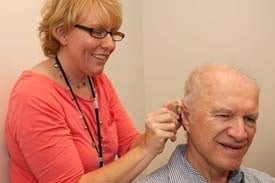
For most people, hearing loss occurs very gradually. The process of getting hearing aids, however, is not gradual. You walk into the audiologist's office, and a few minutes later you're hearing! It takes the brain time to get adjusted to the new sounds you'll be hearing through the hearing aids. To make the adjustment process a little easier, start with easy situations and work your way up to more difficult listening environments.
Hearing loss may make conversational speech seem very soft, or may prevent a person from hearing certain speech sounds at all. This is why people with hearing loss often say they can hear people talking, but can’t understand what they’re saying. They may be able to hear some sounds, so they can hear the person’s voice, but the hearing loss is blocking out the sounds that are vital to understanding. Usually, when a person is diagnosed with a hearing loss, hearing aids are recommended. Hearing aids are designed to amplify the sounds that the person needs the most, the sounds that they are unable to hear due to the hearing loss. Unfortunately, hearing aids have limitations and will not restore hearing to normal. Hearing aids are only part of the hearing loss puzzle. The best solution to increase hearing and understanding at the same time is to pair hearing aids with effective communication strategies.
When choosing the technology that goes into a hearing aid, you may think the most important consideration is your hearing loss. Although your degree of hearing loss is a significant factor, your lifestyle is also plays a critical role.
Two people can have exactly the same type and degree of hearing loss, but because they live very different lifestyles, an audiologist may not recommend the exact same hearing aid. When deciding which features, or level of technology, are most appropriate for you, consider these factors:
Cleveland Hearing & Speech Center audiologists are highly trained professionals. We have Doctoral and Master’s degrees in audiology and we have devoted our careers to helping you hear better. At CHSC, We believe that life is improved by successful communication. We are dedicated to helping people hear better so they can fully enjoy the people and activities that bring meaning to each day.
Social skills are the ways we use our language skills in social situations. Social communication is important in developing effective interpersonal skills and is critical to various aspects of our daily life. Social skills are important in childhood and adulthood. What is the relationship between social skills and speech-language skills/disorders?
Language is the basis for all learning. Children first learn to communicate through eye contact, crying, vocalizing and gesturing. As they grow, they learn the language around them. Children then learn about their world through language by talking, playing and reading; parents and teachers use various forms of language to help children learn. Later, children learn about language as they grow older.


%20(1).png?width=500&height=150&name=BWR2026_SaveTheDate_WebsiteBanner%20(1)%20(1).png)
_GreeceTripRaffle_DEV2026.png?width=500&height=150&name=Signature(Email)_GreeceTripRaffle_DEV2026.png)